


www.samsungbola.com | Agen Bola dan Kasino Online | Agen Bola Terpercaya | Bandar Bola |
President Obama called on the Federal Communications Commission to implement a strict policy of net neutrality and to oppose content providers in restricting bandwidth to customers. Michael Bocchieri/Getty Images hide caption
itoggle caption Michael Bocchieri/Getty Images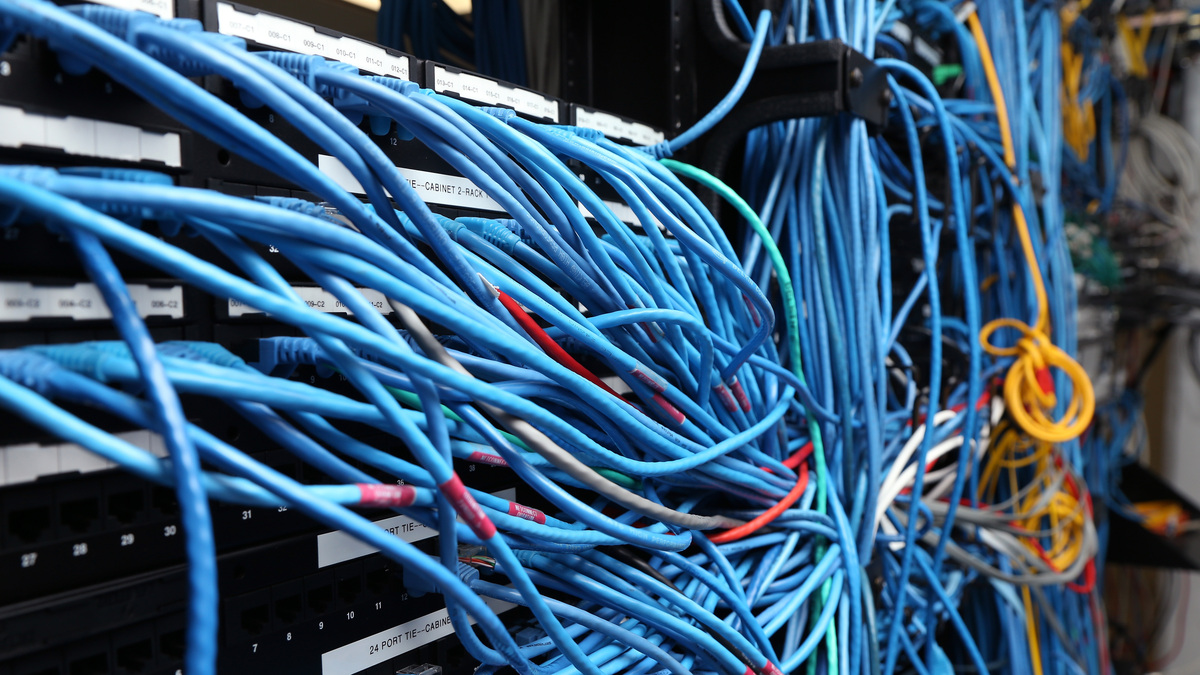 President Obama called on the Federal Communications Commission to implement a strict policy of net neutrality and to oppose content providers in restricting bandwidth to customers.
Michael Bocchieri/Getty Images
In Tuesday night's State of the Union address, President Obama offered a number of ideas for improving the economy. Among them was a nod to the role the Internet plays in economic development.
"I intend to protect a free and open Internet, extend its reach to every classroom, and every community, and help folks build the fastest networks," Obama said.
Those seem like goals everyone can support, but there is deep disagreement over how to achieve them. Those few words hint at several looming clashes between the White House and the big phone and cable companies that provide broadband to most Americans.
And Obama has picked a couple of fights with the powerful telecom industry lately. Last week, he traveled to Iowa to show his support for municipal broadband.
Twenty years ago, Cedar Falls, Iowa, decided to build its own high-speed Internet network, which is now among the fastest in the country. There are other towns that would like to do the same because their other broadband options are too slow, or too expensive, or simply don't exist. But some cities find themselves blocked by state laws.
"In too many places across America, some big companies are doing everything they can to keep out competitors," Obama said last week. "Today in 19 states, we've got laws on the books that stamp out competition."
The president is urging the Federal Communications Commission to preempt state laws that restrict municipal broadband. But not everyone thinks the commission has the legal authority to do that.
"That's a complete legal fantasy," says Berin Szoka, president of TechFreedom, a market-oriented think-tank in Washington.
He says Obama's speech in Iowa was a missed opportunity to encourage more private investment in broadband networks.
"And instead, not only did he call for government-run broadband as the first answer, he called for the FCC to do something that is unconstitutional, that is going to lose in court," Szoka says.
The president's supporters — and at least one federal judge — would dispute that. What the FCC can or cannot do is a hot topic these days. The fight over municipal broadband is just the beginning.


0 comments:
Post a Comment